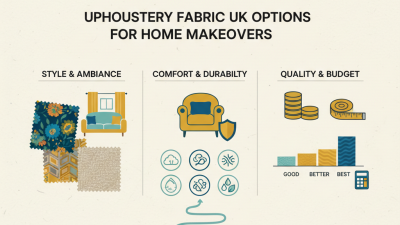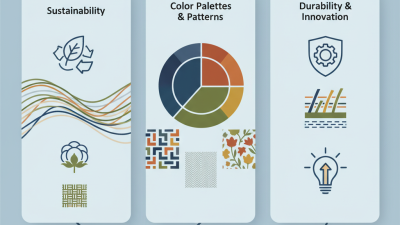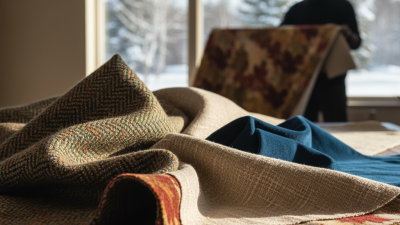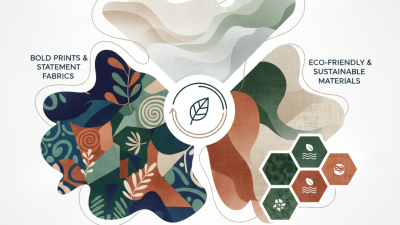
Choosing green upholstery fabric for global sourcing requires more than selecting a natural-looking color or recycled label. Performance, traceability, chemistry, and end-of-life options must be examined together. A sofa fabric faces friction, sunlight, stains, cleaning agents, and years of daily use. It must survive real rooms, not only showroom photography.
Textile Exchange reported that global fiber production reached approximately 124 million tonnes in 2023. Polyester represented about 57% of that volume, while recycled fibers accounted for only 7.6%. These figures reveal both the scale of the challenge and the limits of recycled content alone. UNEP also estimates that textiles create 2–8% of global greenhouse-gas emissions. The numbers are serious, but they do not make one material automatically better. William McDonough, a leading sustainable-design authority, offers a useful warning: “Being less bad is not being good.” That principle belongs in every sourcing meeting.
A responsible green upholstery fabric review should verify recycled or renewable content, supplier traceability, abrasion resistance, colorfastness, chemical disclosures, and credible certifications. Global buyers may compare GRS, RCS, OEKO-TEX, FSC, or other relevant standards, depending on the fiber and claim. Ask for current certificates, test methods, and chain-of-custody evidence. Do not rely on vague words such as “eco,” “clean,” or “natural.” Some recycled textiles still depend on fossil-based inputs, while some natural fibers require substantial water, land, or processing energy. The uncomfortable truth is that perfect fabric rarely exists. Better sourcing means documenting trade-offs, testing samples, and improving decisions with evidence.

When globally sourcing upholstery fabric, define “green” with evidence, not color or texture. The Global Recycled Standard (GRS) sets a minimum threshold of 20% recycled content for certified products. A fabric containing 20% recycled polyester therefore meets the basic recycled-content requirement, but it is not a fully recycled fabric. Request a valid scope certificate and transaction certificate from the supplier. Check the recycled input, production site, and shipment details. A vague claim such as “eco upholstery” is too broad.
Textile Exchange’s Materials Market Report 2024 estimates that global fiber production reached 124 million tonnes in 2023. It could rise to 160 million tonnes by 2030. Recycled fibers represented about 7.6% of global production in 2023. Progress remains limited. For upholstery, compare recycled content with abrasion resistance, colorfastness, seam performance, and cleaning durability. A softer fabric may still fail after heavy commercial use. Ask for laboratory reports from independent testing bodies, not only supplier declarations. I would also record the percentage by mass, because “recycled yarn” does not always mean the finished fabric contains 20% recycled material. That detail is easy to miss. Use precise wording: “contains at least 20% recycled material under GRS requirements,” only when certification documents support it. Recheck every production lot. Supplier certificates can change.
A fair comparison starts with one functional unit: one square metre of finished upholstery fabric. Assume a 500-gram fabric, then record fibre content, recycled share, dyeing, backing, transport, and expected service life. Screening data from ecoinvent v3.10 commonly places virgin polyester near 3–5 kg CO2e per kilogram of fibre. Cotton often falls around 2–4 kg CO2e, depending on farming and electricity. These figures are not universal.
Water changes the picture. The Water Footprint Network estimates global-average cotton at about 10,000 litres per kilogram, including green, blue, and grey water. At 500 grams per square metre, that could represent roughly 5,000 litres. This is not the same as consumed freshwater in an LCA. Irrigation location matters greatly. Recycled polyester generally uses less agricultural water, but its carbon result depends on collection, washing, and electricity. European Commission PEF guidance recommends checking these assumptions instead of trusting one headline number.
Durability must sit beside carbon and water. Test upholstery with ISO 12947 Martindale abrasion methods, then compare results against the buyer’s actual use. A fabric lasting ten years may outperform a lower-carbon option lasting three years. Look closely at pilling, seam slippage, colourfastness, and cleaning cycles. Per square metre is useful, but impact per service year is better. The uncomfortable part: LCA datasets remain imperfect, and supplier declarations may omit finishing chemistry or backing layers. Request the full boundary, allocation method, and test report. Low impact on paper can still become poor sourcing in practice.
How to Choose Green Upholstery Fabric for Global Sourcing?
Screen chemicals before judging a fabric’s color, texture, or recycled content. OEKO-TEX requirements focus on harmful substances in finished textiles. The ZDHC MRSL controls chemical inputs used during manufacturing. These controls address different stages, so one document cannot replace the other.
Ask suppliers for current safety data sheets, chemical inventories, and laboratory reports. Check product names, CAS numbers, concentrations, and intended production steps. A dye may appear acceptable, while a finishing agent introduces restricted substances. Review adhesives, flame retardants, stain repellents, pigments, and cleaning agents. Keep records by factory and production batch. Traceability matters when mills change subcontractors without clear notice.
Use independent testing for risk-based verification. Test greige fabric, dyed fabric, and finished upholstery separately. Pay attention to heavy metals, formaldehyde, aromatic amines, phthalates, and organotin compounds. Compare results with the latest OEKO-TEX limits and ZDHC MRSL requirements, not an old supplier template. Confirm wastewater controls too. Chemical input compliance does not automatically prove responsible discharge.
Small details expose weak systems. A missing CAS number is a warning. So is an unsigned declaration. I have seen neat spreadsheets hide unclear chemical substitutions. That mistake is easy to make. Request corrective actions, retest after changes, and avoid vague claims such as “non-toxic.” Green sourcing becomes more credible when every claim connects to a document, a test, and a traceable production decision.
This comparison shows the primary control points directly addressed by each requirement system. OEKO-TEX STANDARD 100 focuses on harmful-substance testing in finished textile products, while the ZDHC MRSL focuses on restricting hazardous chemicals in manufacturing inputs. A value of 1 means the control point is directly addressed; 0 means it is outside the primary scope of that document.
Always verify the latest applicable standard, product class, testing method, and MRSL version before approving upholstery fabric or chemical suppliers.
Choosing green upholstery fabric for global sourcing requires evidence beyond a recycled-content claim. ISO 14024 covers Type I ecolabels, which use third-party verification and multiple life-cycle criteria. It is not a simple marketing badge. Ask which product, fiber percentage, and production site the certification covers. A valid certificate should match the fabric specification, not only the supplier’s general company profile.
Chain-of-custody records add practical proof. Request scope certificates, transaction records, lot numbers, and shipment documents from the fiber producer to the fabric mill. Check whether the system uses physical segregation, controlled blending, or mass balance. These methods are not identical. Textile Exchange’s Materials Market Report 2024 reported global fiber production at about 124 million tonnes in 2023. Polyester represented roughly 57 percent. That scale makes traceability difficult, especially across several countries. I would verify every handoff. A spreadsheet can still contain errors.
Tips: Compare the certificate holder with the invoice issuer. Match fiber percentages across test reports and purchase documents. Request recent records, not sample paperwork from an old order. Check dyeing and finishing sites too. If a supplier cannot explain the chain clearly, pause the purchase. Green sourcing is rarely perfect. Even careful teams may miss subcontracted processing. Independent audits and laboratory tests can expose those gaps before the fabric reaches a showroom.
| Evaluation Dimension | What to Check | Relevant Standard or Record | Acceptable Evidence | Verification Questions | Sourcing Decision |
|---|---|---|---|---|---|
| Environmental label type | Determine whether the environmental claim is independently assessed and covers multiple impact criteria. | ISO 14024 Type I environmental labelling. | The complete ecolabelling scheme requirements, publicly available criteria, certification scope, validity dates, and independent conformity-assessment details. | Does the scheme identify itself as Type I? Are criteria developed using a life-cycle perspective and applied by an independent third party? | Prefer a valid Type I certification. Treat self-declared “eco” wording as unverified until independently supported. |
| Fiber composition | Confirm the percentage of virgin, recycled, organic, regenerated, or agricultural fibers. | Product specification, bill of materials, and applicable fiber-content certification. | Signed material composition declaration, laboratory fiber analysis where needed, purchase specification, and batch or lot reference. | Do declared percentages add up to 100%? Do the documents refer to the exact fabric construction, color, and production lot? | Approve only when the composition is traceable to the supplied upholstery fabric, not merely to a raw-fiber brochure. |
| Recycled-content claim | Separate pre-consumer and post-consumer recycled content and confirm the claimed percentage. | A recognized recycled-content certification scheme with chain-of-custody controls; ISO 14021 may also apply to self-declared claims. | Valid certificate, transaction or scope records, recycled-input purchase documents, production reconciliation, and test reports where applicable. | Is the input defined as pre-consumer or post-consumer? Is mass balance, segregation, or another chain-of-custody model being used? | Use the exact certified percentage in procurement documents. Do not convert “recyclable” into “made with recycled content.” |
| Organic or responsibly grown fiber | Verify the agricultural input claim and its continuity through spinning, weaving, dyeing, and finishing. | Applicable organic-textile certification requirements and documented chain of custody. | Valid scope certificate, transaction certificate or equivalent shipment record, raw-material certificates, and processor records. | Does the certificate cover the specific facility and process? Does the shipment quantity reconcile with the certified input quantity? | Accept only if the certificate covers the relevant product category and the physical or controlled accounting trail is complete. |
| Chain-of-custody integrity | Track certified material from input purchase through processing and final fabric dispatch. | ISO 22095 chain-of-custody terminology and model selection. | Supplier and processor certificates, lot numbers, goods-received records, production orders, inventory movements, transfer documents, and dispatch records. | Which model is used: identity preservation, segregation, controlled blending, mass balance, or book-and-claim? Is the model permitted by the claim scheme? | Choose a model that matches the claim wording. Do not describe mass-balance or book-and-claim material as physically segregated. |
| Chemical and finishing controls | Review dyes, finishes, flame retardants, stain repellents, formaldehyde, heavy metals, and restricted substances. | Applicable restricted-substance requirements, buyer specification, and chemical-management audit evidence. | Current laboratory test report, chemical inventory, safety data sheets, process chemical list, and corrective-action records. | Does the test report cover the final finished fabric? Are test methods, detection limits, sample date, and lot number stated? | Reject unsupported “non-toxic” or “chemical-free” claims. Specify measurable restricted-substance limits instead. |
| Durability and service life | Assess abrasion, seam performance, colorfastness, pilling, dimensional stability, and cleaning performance. | Relevant textile and upholstery performance test methods specified in the purchase requirement. | Independent test report stating method, result, specimen construction, finish, and conditioning details. | Were tests performed on the final fabric? Are results suitable for the intended contract, hospitality, transport, or residential use? | Prefer the fabric with the best verified service life for the application, not simply the highest recycled-content percentage. |
| Carbon and environmental data | Check whether climate or impact data covers raw materials, manufacturing, transport, use, and end-of-life assumptions. | ISO 14025 Type III environmental product declarations, life-cycle assessment documentation, or a transparent quantified study. | Program-operator-verified declaration or full methodology showing functional unit, system boundary, data sources, allocation rules, and review process. | Are two fabrics being compared using the same functional unit and system boundary? Are biogenic carbon and transport assumptions disclosed? | Use environmental figures for like-for-like comparison only. Do not treat a carbon figure as proof of ISO 14024 certification. |
| Country and facility coverage | Confirm where fiber preparation, spinning, weaving or knitting, dyeing, finishing, and inspection occur. | Certificate scope, facility license, audit report, and commercial invoice or packing-list details. | Facility names and addresses, approved process scope, certificate validity, shipment references, and subcontractor declarations. | Does the certificate cover every facility involved? Are subcontracted dyeing, coating, lamination, or finishing operations included? | Place the fabric on hold if any processing stage falls outside the certified or documented supply chain. |
| Claim wording and marketing use | Ensure the claim is precise, qualified, and limited to the certified product or material share. | ISO 14020 series principles and applicable consumer-protection or environmental-marketing rules in the destination market. | Approved claim text, certification mark-use authorization, product certificate, and supporting records retained for audit. | Does the wording state what is certified, what percentage is covered, and which process or life-cycle stage is included? | Use specific wording such as “contains X% certified recycled polyester,” rather than broad claims such as “100% sustainable.” |
For global sourcing, green upholstery fabric must survive the room it enters. In busy lounges, hotel lobbies, and family dining areas, specify at least 30,000 double rubs before approving samples. This threshold offers a practical durability screen, not a guarantee of endless service. A fabric may still pill, fade, or lose coating under harsh use. Ask the mill which abrasion method produced the result. Test standards can differ.
During sampling, place the fabric on a firm seat and inspect the weave after repeated contact. Look for broken yarns, fuzzing, color transfer, and exposed backing. Request performance data for seam slippage, colorfastness, cleaning, and flame behavior where local rules require it. For greener sourcing, check recycled content claims, fiber composition, dyeing records, and wastewater controls. Documentation matters more than a vague “eco” label.
A 30,000-plus rating works best when matched with fabric construction. Tight weaves often resist snagging, while solution-dyed fibers can support color retention in sunlit spaces. Still, every project has different risks. Sand, denim rivets, pets, and frequent cleaning can defeat a basic specification. I would order a larger cutting and run a small cleaning trial. Small tests expose expensive mistakes. That step is easy to skip, and sometimes we do. Review the result before committing to container quantities.