
How to Choose the Best Car Shelter for Your Needs?

Choosing the best Car Shelter begins with the space around your vehicle, not with a glossy product photo. Measure the driveway, check nearby trees, and notice how rainwater moves after a storm. A shelter that looks perfect online may block a gate or scrape against a low branch. Small details matter.

“Protection must be matched to the conditions, not just the vehicle,” says Mark D. Evans, a carport and outdoor-structures consultant with more than two decades of installation experience. His point is practical. A coastal homeowner may need corrosion-resistant steel and stronger anchoring. Someone in a snowy region may need a steep roof, reinforced frame, and a documented snow-load rating. In windy areas, fabric quality alone is not enough. Ground fixing matters more.

Think beyond today’s car. Will an SUV, bicycle rack, or charging cable need extra room later? Consider height, ventilation, access, drainage, and local installation requirements. Material choice also changes maintenance. Galvanized steel handles harsh weather well, while heavy-duty fabric can offer flexibility and easier relocation. Neither option is automatically best.

There is no flawless choice. I might prefer a compact shelter to save space, then regret the tight clearance when loading groceries. That uncomfortable possibility deserves attention. Compare specifications, warranty terms, replacement parts, and real customer photos. Ask the seller direct questions. A reliable Car Shelter should protect the vehicle, suit the property, and remain practical through changing seasons.
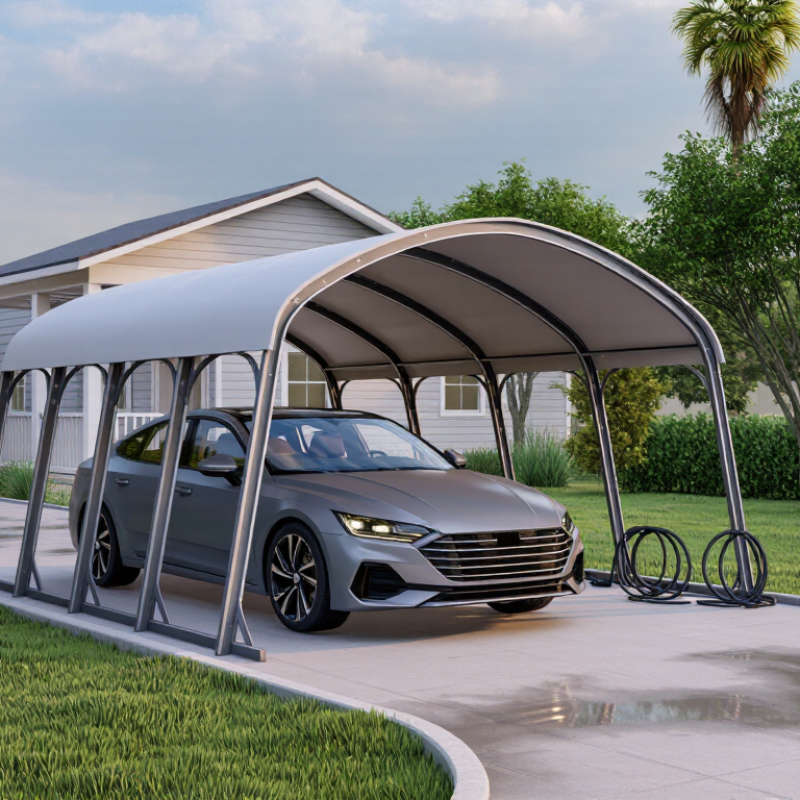
How to Choose the Best Car Shelter for Your Needs?

Understanding Your Car Shelter Needs

Understanding your car shelter needs begins with the space around your vehicle. Measure the car with doors, mirrors, and the rear hatch fully open. Add clearance for walking, snow removal, and loading groceries. A tight shelter may protect paint, but it can make daily access frustrating. I once underestimated door clearance by a few inches. That small error mattered every morning.

Consider your local weather before choosing materials or structure. Strong wind requires reliable anchoring and a firm ground surface. Heavy snow needs a frame designed for the expected load, not merely a thick-looking cover. In hot climates, UV-resistant fabric and airflow can reduce heat buildup. Ventilation matters.

Do not ignore everyday habits. Will you park inside for months, or only during storms? Do you need space for bicycles, tools, or a second vehicle? A portable shelter may suit temporary use, while a permanent structure can provide better stability and security. Check local property rules before installation, because requirements differ by location. Measure twice. Ask questions. Also inspect seams, fasteners, drainage, and anchor points regularly. Even a well-built shelter can loosen after repeated wind and temperature changes. My preference would be the largest practical shelter, but excessive size can waste space and increase maintenance. The best choice balances protection, access, climate, budget, and honest expectations.

Comparing Shelter Types and Structural Materials

Choosing a car shelter starts with exposure, not appearance. Freestanding shelters suit open driveways and allow future relocation. Attached shelters save posts and can simplify daily access, but they transfer loads to the house wall. Portable fabric shelters install quickly. They usually need more frequent checks for torn covers, loose anchors, and pooled rainwater. Rigid shelters perform better in severe weather, although their foundations demand more planning.

Material choice changes durability, maintenance, and environmental impact. Galvanized steel offers strong frames and modest maintenance. The World Steel Association reports that more than 680 million tonnes of steel are recycled globally each year. That supports steel’s circularity, but recycling does not excuse poor coating quality. Aluminum resists corrosion and weighs less. The Aluminum Association states that nearly 75% of all aluminum ever produced remains in use. It can suit coastal locations, though thinner sections may flex more under snow or wind. Timber feels warmer and can blend with homes, but moisture protection becomes a recurring responsibility.

A reliable comparison must use local design loads. ASCE 7-22 provides procedures for wind, snow, and rain loads, while local authorities may require different parameters. Check the frame, anchors, drainage, and foundation as one system. I initially focused too heavily on roof material. That was a mistake. A strong panel cannot compensate for weak footings or neglected connections. Measure vehicle clearance carefully, including mirrors, roof racks, and opening doors. Small oversights become daily frustrations.

How to Choose the Best Car Shelter for Your Needs? - Comparing Shelter Types and Structural Materials

Shelter Type Best Suited For Typical Capacity Weather Protection Installation Complexity Portability Typical Service Life Cost Level Main Limitations
Open-Sided Carport Everyday parking, shade, rain protection, and convenient vehicle access Usually one or two vehicles Good protection from sun, rain, and light snow; limited protection from wind-driven rain and blowing snow Low to moderate; posts require secure anchoring and a suitable foundation Low once installed Approximately 15–30 years with durable structural materials and regular maintenance Low to medium Open sides provide less privacy and weaker protection in severe wind or drifting snow
Gable-Roof Carport Areas needing better rain and snow shedding with a conventional appearance Usually one or two vehicles Good protection from sun and precipitation; performance depends on roof pitch, bracing, and local design loads Moderate; roof framing and anchoring require careful assembly Low Approximately 15–30 years for metal framing with a well-maintained roof system Medium More components, higher wind exposure, and greater foundation requirements than a basic flat or single-slope structure
Attached Carport Homes or buildings where convenient access and shared structural support are priorities Usually one or two vehicles Good, because one side benefits from the existing building; flashing and drainage must be properly detailed Moderate to high; connection to the existing building must be engineered or installed correctly Very low Approximately 15–30 years, subject to both shelter and building connection maintenance Medium May require permits, compatible wall construction, and careful control of water at the building connection
Freestanding Garage Maximum security, storage, privacy, and protection from wind, snow, and theft One or more vehicles, depending on floor area Very good when walls, roof, doors, drainage, and anchoring are designed for local conditions High; commonly needs a foundation, framing, weatherproof envelope, doors, and electrical work Very low Approximately 30–60 years or more with sound construction and maintenance High Highest initial cost, longer construction time, planning requirements, and limited future relocation
Fabric-Covered Portable Shelter Temporary parking, seasonal use, rental properties, and changing site requirements Usually one or two vehicles Good protection from sun and rain; snow and wind performance depends heavily on frame, cover tension, anchoring, and maintenance Low to moderate; assembly is generally straightforward, but anchoring is critical High; can usually be disassembled and relocated Frame: approximately 10–20 years; fabric cover: commonly 5–15 years depending on UV exposure and climate Low to medium Cover can degrade, flap, or tear; not ideal for unmaintained sites or extreme weather without suitable engineering
Retractable or Folding Shelter Occasional shade and weather protection where open access is important Usually one vehicle Moderate; effective when deployed, but generally less resistant to severe wind and heavy snow than permanent structures Low to moderate, depending on the base and operating mechanism Moderate to high Approximately 5–15 years, depending on mechanism use, fabric quality, and exposure Medium Moving parts require maintenance, and the shelter may need to be closed or retracted during severe weather

Structural Material Comparison

Structural Material Strength and Stability Corrosion or Decay Resistance Maintenance Needs Approximate Service Life Weight and Installation Best Applications Key Considerations
Hot-Dip Galvanized Steel ★★★★★ Very good when the zinc coating remains intact; cut edges, scratches, and trapped moisture should be addressed Low; inspect fasteners, joints, coating damage, and drainage areas periodically Approximately 20–40 years or more, depending on coating thickness, environment, and maintenance Heavy and highly stable; often needs robust footings or anchors Permanent carports, garages, and locations with higher wind or snow demands Heavier than aluminum and may require touch-up protection after drilling, cutting, or impact damage
Powder-Coated Steel ★★★★★ Good when the coating system is properly applied; damage can expose steel to rust Low to moderate; clean dirt and repair coating chips before corrosion spreads Approximately 15–30 years, influenced by coating quality, sunlight, moisture, and coastal exposure Heavy and rigid; provides strong resistance to movement when properly anchored Permanent or semi-permanent shelters where appearance and rigidity matter Coating quality varies; avoid standing water and use compatible fasteners to reduce galvanic or surface corrosion issues
Aluminum ★★★★☆ Very good natural corrosion resistance; usually forms a protective oxide layer Low; rinse salt and pollutants from the surface in coastal or industrial areas Approximately 20–40 years or more, depending on alloy, thickness, connections, and exposure Lightweight and easier to handle; may need larger sections or stronger bracing than steel for equivalent stiffness Residential carports, portable frames, and projects where low weight is valuable More vulnerable to dents and deflection; dissimilar-metal contact should be isolated where necessary
Pressure-Treated Timber ★★★★☆ Good against decay when properly treated and kept above standing water; end cuts require suitable preservative treatment Moderate to high; inspect for moisture damage, splitting, fastener corrosion, and insect activity Approximately 15–30 years, depending on treatment level, ventilation, drainage, and maintenance Moderately heavy; familiar construction methods but accurate footing and bracing are essential Attached or freestanding structures where a traditional appearance is preferred Can shrink, swell, crack, or warp; use compatible corrosion-resistant connectors and maintain clearance from soil
Engineered Wood ★★★★☆ Stable when protected from persistent moisture; exposed products require appropriate weather protection Moderate; inspect coatings, joints, flashing, and areas vulnerable to water entry Approximately 20–40 years when properly designed, protected, and maintained Moderate weight; can provide consistent dimensions and efficient spans Enclosed garages and designed roof structures with controlled moisture exposure Must be selected for the intended exposure; poor detailing around roof edges and connections can shorten its life
Fabric Membrane with Steel or Aluminum Frame ★★★☆☆ Frame resistance depends on metal; the membrane must resist UV, moisture, mildew, and tearing Moderate; clean the cover, maintain tension, inspect seams, and replace damaged sections Frame: approximately 10–25 years; membrane: commonly 5–15 years, depending on fabric and climate Light to moderate; generally faster to assemble than rigid construction Temporary, seasonal, portable, and lower-cost shelter applications Anchoring, snow removal, wind management, and fabric replacement are critical to safe long-term use

Planning note: Service-life ranges and performance ratings are typical estimates, not guarantees. Final selection should account for local wind speed, snow load, rainfall, corrosion exposure, foundation conditions, drainage, permits, and the manufacturer’s structural specifications.

Evaluating Size, Placement, and Weather Protection

How to Choose the Best Car Shelter for Your Needs?

Evaluating Size, Placement, and Weather Protection

Choosing a car shelter starts with measurements, not appearance. Record the vehicle’s length, width, height, and door clearance. Add space for mirrors, open doors, and walking around the car. A tight shelter may protect the paint but make daily use frustrating. I learned this after repeatedly folding a mirror in a narrow setup. My first estimate was wrong.

Placement affects both convenience and durability. Choose level ground that drains quickly after heavy rain. Avoid low areas, loose soil, and locations beneath weak branches. Leave enough clearance around the shelter for airflow and maintenance. Check the sun’s path, too. Morning shade may become harsh afternoon heat. A nearby wall can reduce wind, but it may also trap moisture.

Weather protection requires more than a waterproof cover. Look for a strong frame, sealed seams, and breathable materials that limit condensation. In snowy regions, check the stated snow-load capacity and remove heavy buildup promptly. For windy areas, use reliable anchors suited to the ground type. Do not assume extra weight alone will prevent movement. Inspect connections after storms, even when nothing looks damaged. Small tears and loosened fasteners can worsen quietly. I once ignored a slightly tilted support, and the next storm exposed the weakness. Regular checks feel inconvenient, but they cost less than replacing a damaged shelter or vehicle.

Checking Installation, Maintenance, and Safety Features

Choosing a car shelter means checking more than fabric thickness or appearance. Installation determines whether the structure remains stable during wind, rain, and snow. The American Society of Civil Engineers’ ASCE 7-22 standard recommends designing for local wind and snow loads, not generic national averages. Ask for the shelter’s rated load limits and confirm the anchoring method suits your ground. Concrete, asphalt, and soil need different fasteners. A shelter that feels secure on a calm afternoon may behave differently during a storm.

Safety features deserve close attention. NFPA’s U.S. Vehicle Fires report recorded an average of 15,970 vehicle fires annually from 2018 to 2022. Keep the shelter away from heat sources, electrical hazards, and blocked access routes. Select flame-resistant materials where available, but do not treat them as fireproof. Clear ventilation matters too. Never run an engine inside an enclosed shelter. Carbon monoxide is invisible and fast-moving.

Maintenance is less exciting, but it prevents expensive surprises. Inspect seams, straps, poles, and anchors after severe weather. Look for rust, stretched fabric, pooled water, or loosened connections. Small damage grows. The U.S. Consumer Product Safety Commission repeatedly emphasizes following assembly instructions and checking products for hazards during use. That advice sounds basic, yet it is easy to ignore. I would also photograph the shelter after installation and review it monthly. A mistake is assuming “temporary” means maintenance-free. It does not. Replace damaged parts before the next storm, not after it.

How to Choose the Best Car Shelter for Your Needs?

Comparison of installation, maintenance, and safety priorities using a five-point evaluation checklist.

A suitable shelter should be easy to install on a level surface, require regular checks of its frame, cover, fasteners, and corrosion protection, and include secure anchoring, adequate clearance, and weather-load considerations. Higher scores indicate stronger coverage of these practical selection factors.

Balancing Budget, Durability, and Long-Term Value

Choosing a car shelter starts with your local threats, not its advertised price. NOAA recorded 28 billion-dollar weather and climate disasters in the United States during 2023. Hail, wind, flooding, and heavy snow can turn a cheap cover into a costly mistake. Check drainage, anchoring, frame joints, and fabric repair options before comparing prices.

Budget matters, but lifetime value matters more. A basic shelter may cost less initially, yet replacement fabric, rust treatment, and seasonal removal can raise ownership costs. I calculate the five-year cost: purchase, installation, maintenance, repairs, and likely replacement. My first estimate is often wrong. Small accessories add up quickly.

Durability needs evidence. Ask for wind-load ratings, snow-load guidance, corrosion protection details, and installation instructions. Standards such as ASCE 7 help engineers assess wind and snow forces, while local building requirements determine suitable foundations and permits. The Insurance Information Institute reported that severe convective storms caused significant insured losses in recent years, reinforcing the value of proper anchoring and impact-aware placement. Leave space around the vehicle. Avoid low areas where runoff collects. A shelter that survives one storm but weakens after repeated exposure is not a bargain. Look for clear warranty terms, replaceable components, and documented testing rather than vague claims. Fancy features help less than solid construction.